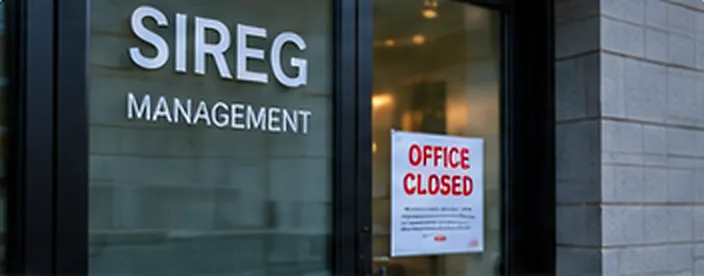
Who renews the insurance on a condo with no board and no manager? Right now, nobody can. To close that gap, LDDC, the law firm acting for a group of owners, announced a new approach on October 9, 2026: ask the judge already handling the SIREG insolvency to name an interim administrator, rather than filing separate cases for each building.
The new plan at a glance
| Details | |
|---|---|
| Where | Inside the existing SIREG court case. No separate applications for now. |
| Legal fee | $10,000 plus HST and disbursements per corporation (previously about $35,000) |
| Who takes part | Only owners who choose to |
| Deadline | Retainer signed and paid by Monday, October 12 at 5:00 p.m. |
| Why the rush | The trustee warned SIREG could run out of money before the end of October |
How long is the gap?
All 43 SIREG-managed boards resigned around September 17, and the management licence was suspended September 29. Until owners elect directors, no one can legally act for these corporations. LDDC's most optimistic estimate was four to six weeks before a new board could actually function, because:
- a valid meeting requires notice to every owner, and owners do not have the list;
- notice must be given 15 days ahead, so a notice mailed Tuesday, October 13 means a meeting no earlier than October 28;
- willing, qualified candidates must come forward, and the result must be filed with the Condominium Authority of Ontario; and
- a brand-new board still has to hire a manager, open bank accounts and work out the building's condition and finances from scratch.
What can go wrong in those weeks
- An insurance policy expires, or a required notice to the insurer is never given, or is later called invalid.
- A utility is cut off for non-payment.
- Something breaks and no one can hire a contractor.
- Owners who volunteer as directors find they have no directors' insurance.
Why not just hold an election?
Owners can. With no directors in office, any owner may call a meeting to elect them under section 34(5) of the Condominium Act. A requisition will not work, because there is no board to send it to. SIREG and the trustee were also planning to ask the court for owner meetings.
LDDC said a building may manage without an administrator if it already has a full owner list, a date and venue, candidates ready to serve, a licensed manager lined up for the day after the vote, and no insurance renewal, utility issue or urgent repair coming up. Missing any one of these makes the weeks before and after the vote risky. And the two routes are not either/or: owners still choose their own board under the administrator route; the administrator just keeps the building safe until then.
An administrator's job list
- Exercise the board's authority until directors are elected.
- Deal with insurance first, confirming coverage, renewals and notices. The building's policy insures the corporation, not SIREG.
- Pay utilities, order urgent repairs and handle the corporation's part of any claim, such as a fire in a unit.
- Trace each corporation's operating and reserve money through the records.
- Organize the election with a group of engaged owners in each building, a "shadow board".
- Hand over a functioning building, with a manager, engineer, auditor and lawyer in place, which the new board may keep or replace.
Organized buildings can leave early
Each building is assessed separately, and the administrator tells the court when it is ready to be released. A building with no urgent problems and willing directors could be out quickly; LDDC mentioned about a month as an illustration, not a promise. Only the court can release the administrator, and it usually follows his recommendation. Buildings are billed for their own work, and share only the cost of tasks done once for all.
The money
- Legal fee: $10,000 plus HST and disbursements per corporation, split among the building's participating owners. It dropped because a separate administrator application and a legal opinion on SIREG's rental contracts are no longer needed. Owners who had already signed up pay the lower share, and the fee will not rise without their consent.
- Administrator: paid by the corporation, approved by the court, with time records any owner can dispute. No total estimate was available. The earlier quoted rate was $375 an hour.
- Bridge funding: a small special assessment may be needed until November condo fees arrive.
- Recovering losses: money owed to a building is pursued by the corporation, not by individual owners.
Your choice
Taking part is voluntary. Owners who stay out lose none of their rights, and if an administrator is appointed, its cost is shared by all units. You may get independent advice or hire another firm. Where SIREG companies own many units, those units are expected to be sold, and they can be voted only if their condo fees are paid up.
Your tenant
SIREG and the trustee plan to ask the court to transfer SIREG's leases to unit owners. If that is approved, LDDC expects owners to be collecting rent themselves by November 1. Until instructions arrive, do not approach your tenant: jumping ahead could cause complications.
Court dates already set
A court endorsement released October 9 (PDF) fixed two dates:
- October 13, 12:30 p.m.: Firm Capital's 30-minute motion. As first-ranking mortgage lender on certain residential properties, it wants the stay lifted (the stay is the freeze that stops creditors from enforcing).
- October 20, 11 a.m.: AlixPartners' two-hour urgent motion.