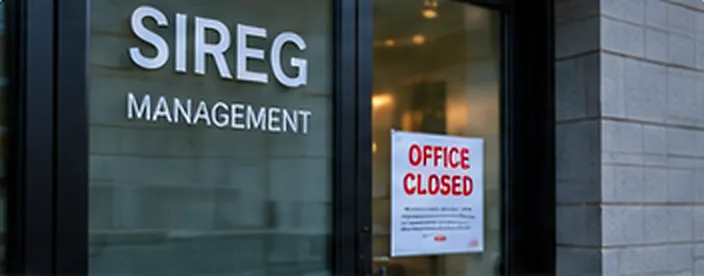
The Condominium Authority of Ontario (CAO) cannot step in and run the former SIREG buildings. Its staff made that clear when they met owners from several of those buildings on the morning of October 8, 2026. The CAO had called the meeting to explain what owners can do on their own while there are no working boards and SIREG Management's licence is suspended.
The CAO's limits
| Question | CAO's answer |
|---|---|
| Can it extend our insurance? | No. That takes a working board, or an administrator appointed by a court. |
| Can it appoint an administrator? | No. Only a court can, under section 131 of the Condominium Act, 1998. |
| Does it have owners' contact details? | No. Corporations do not report them. The CMRAO (the condo manager regulator) sent its own notice using contacts it had; the CAO could not vouch for that list. |
| Does it see day-to-day failures? | Only some compliance items, such as annual returns, director training and AGM dates. Not things like status certificates that never arrive or records requests that go unanswered. |
Getting a new board
- A requisition (owners' written demand for a meeting) starts a waiting period. Owners normally must let the board's response time run out before calling the meeting themselves.
- A quicker meeting under section 34 is possible only with written proof that directors quit and too few remain to act. Directors going silent does not count.
- Virtual meetings no longer need a special by-law, following changes in November 2023, though a by-law can restrict them.
- Who are the directors? If the CAO registry and old minutes disagree, look at when the registry entry was last updated, and send notices to anyone who might still hold the role.
When you do not know all the owners
- Land-registry documents, starting with parcel registers, can supply owner names and addresses for service.
- Where no other address is known, mailing notice to the unit itself shows good faith if the meeting is challenged later.
- Any owner may go to court to challenge a meeting. Careful notice makes the results more likely to hold.
Pressure on the Minister
CAO communications staff offered to help bring these problems to the Honourable Stephen Crawford, the Minister of Public and Business Service Delivery and Procurement, who oversees the Condominium Act and the condo regulators. They urged owners to write to him as well. The points raised:
- The Act was never designed for buildings with no board and no manager at all.
- A board that is not functioning cannot supply the owner list, and without that list every lawful option slows down.
- Meanwhile insurance, utilities, tenant issues and unpaid bills keep getting worse.
- The CAO itself acknowledged that having owner contact details would help in a crisis like this.
What owners should keep doing
- Gather documents and keep asking for records in writing.
- Order parcel registers to fill gaps in owner names and addresses.
- Pick the route that suits your building: a court administrator, an owner-called meeting where the facts allow it, or a requisition.